Born on the Water: Documenting History
Hi Friends,
Now that it’s been a few days, I’m coming down from spending the past two weeks on a huge project. If you’ve been following me over on Instagram, you know that project has been serving as Visual Director and Documentary Lead for Born on the Water, a world-premiere theatrical adaptation based on the children’s book from The 1619 Project directed by Marjuan Canady and performed by Canady Foundation for the Arts.
It’s one of those dream projects where the timing on everything works out well, patience meets practice and I’m in the right place at the right time. I wanted to go behind my process for prepping for this whole show, from rehearsals to actual show day to help capture the story in its totality.
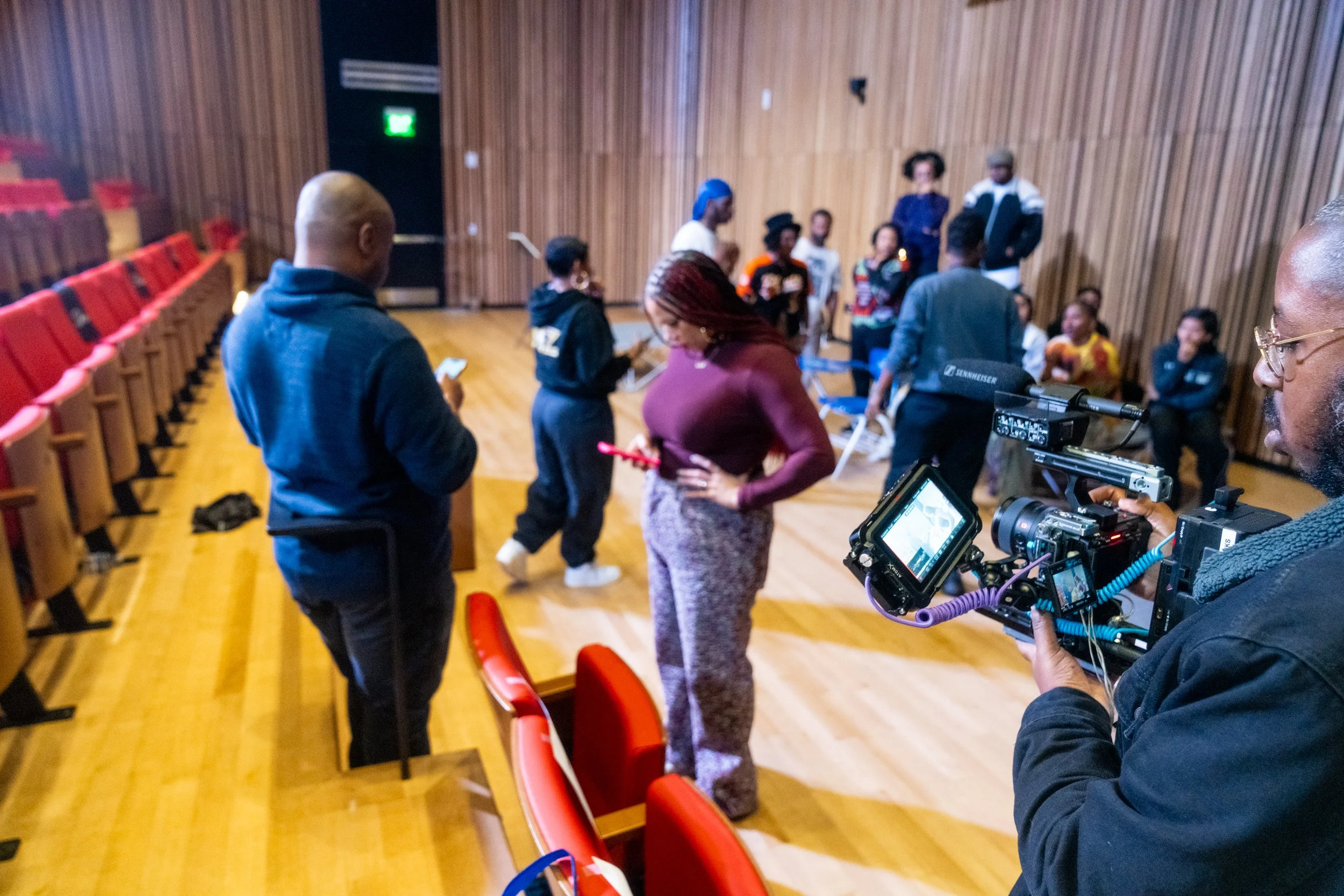
To start, I was brought in on this project early. Not just documenting the show itself, but the process leading up to the show. Rehearsals. Watching the troupe figure out where they needed to be, when they needed to be there and how everything worked together as a whole, living, breathing thing that lives on a stage.
I’m no stranger to theatre or stage work. I’ve shot plenty of concerts and shows over the years. I know what I’m up against when it comes to stepping into the space and figuring out how to deal with lighting, or the very often lack thereof.
I also knew that saving these photos was going to be important for later on, and making sure the video was both high quality and manageable.
So if I’m documenting with video and working on stills, that means I had to consider both the weight of my kit and what I could and couldn’t setup. I couldn’t do standing lights, because the actors would be moving around. A tripod could and was handy for setting down the camera between shots but it had to be off to the side. And because this was a troupe doing a piece on a wide stage, I need to be able to isolate each individual actor while also being able to view the group as a whole.
I ended up running with the Sony Electronics FX3 and the Sony FE 24mm f/1.4 G Master lens as my main video capturing kit. The FX3 has been so wonderful to use in previous documentary work in low-light thanks to the high light sensitivity levels, and 24mm at 1.4 would allow a lot of light to get to the sensor while being able to both capture the whole team and isolate each person. It’s also incredibly lightweight, so it made it a perfect compliment to this kit. I could hold this setup for a long time without feeling fatigued.
For stills, I went with the Sony Alpha a7R IV. It’s a camera I’m very familiar with, having covered everything from concerts to the Tulsa Race Massacre Centennial to White House assignments with it. I know where it shines best and how to work around it’s weak spots. The FE 24-70mm f/2.8 G Master lens was my primary stills lens, allowing me to get enough light into the camera while still covering the zoom range I needed to get detailed shots of the various elements happening - actor shots, scripts, notes, all the details that help tell the story and ground it.
These two served as the core of the kit, allowing me to document the rehearsals with sensitivity to staying out of the way while doing it. After each night of rehearsals, I would dump all the footage and stills, named and categorized the files and dropped them to two different storage spaces, usually Samsung Electronics America T7 SSDs. This secured the files in two locations in case of anything happening.
Once everything was backed up, I would edit the files that were priority, deliver them, and then and only then, format my media and charge my batteries up for the next day. This kept me organized and allowed me to know everything was under control.
As we got closer to the actual show day, other variables started to come into view. One of them was audio. I had been using the Sennheiser MKE 600 on the FX3 for audio as I moved around, but on the day of the actual show, I would need audio coming from the soundboard to feed into the camera. That meant using long XLR cables to go from the soundboard in the upper corner of the theatre to the camera, which meant the camera needed to be placed on the upper levels and close by. Placing the camera there solved two problems.
One, it put the camera right near to the soundboard, so the XLR cables could be run fairly easily from soundboard to the camera without obstructing the venue staff moving throughout the space. Two, the location put me right in the center of the audience, out of the way of obstructing anyone while still capturing the full performance of the stage.
I kept running with this setup until the actual day of show. Up until this point, I had been using an external monitor to follow the action along as I moved throughout the rehearsal days, but actual show day would mean no room for error, especially with very important guests in the show. So I swapped out my external monitor for an ATOMOS Ninja V, an external recorder that could also take the RAW, unfiltered video from the FX3’s sensor and store all of that data in a high-quality file while still continuing to record internally to the body. This gave me plenty of room to document the full day of the show, from intimate speaking moments on stage, to the full show run from the audience, to post-show interviews with the cast, crew and guests. I also started using the Sony FE 70-200mm f/2.8 to capture isolated shots of the actors as they performed, and the Harlowe Mini Max 40W light for portraits to add a nice, warm glow to the images.
Each of the challenges of documenting this whole experience meant figuring out a way to navigate each section of the process, but understanding what I was doing and why I was doing it allowed me to plan ahead and be prepared.
I couldn’t be happier to have worked on such a magnificent and cultural project. If I was someone just getting into this space of work, I would keep a few things in mind.
Be aware of what kind of spaces you’re going to be filming/shooting in, then build your kit to solve the problems you might encounter. Doing this puts you way ahead of anything that could potentially happen and make it easier to navigate around any issues you might come across.
I can’t wait for people to see the full body of work, but for now, you can follow the project here and follow me on this platform and Instagram as more work continues.